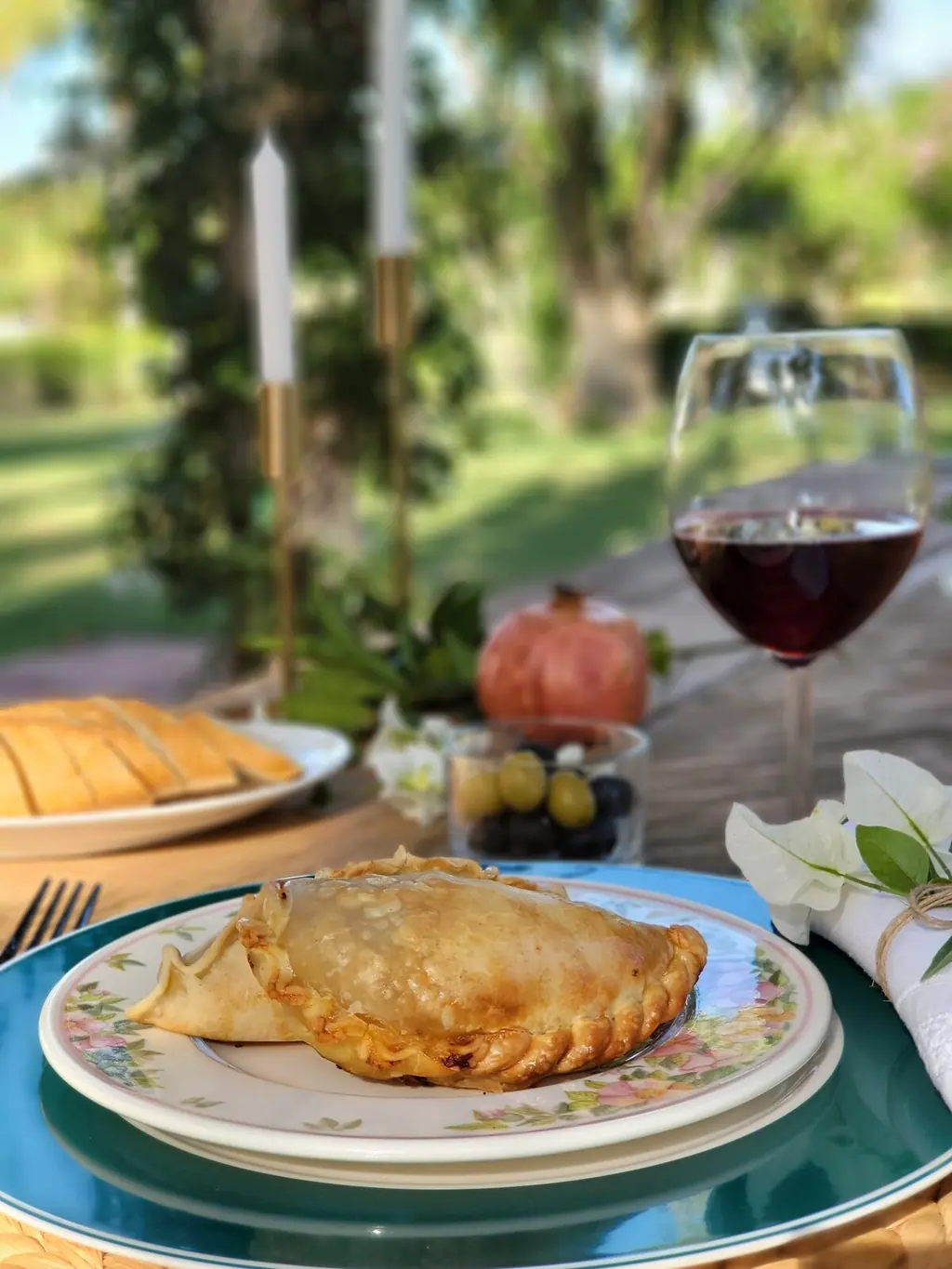
Fried
The dough blisters and the edge goes crisp. It’s how they’re eaten in the north and how they’re asked for most.
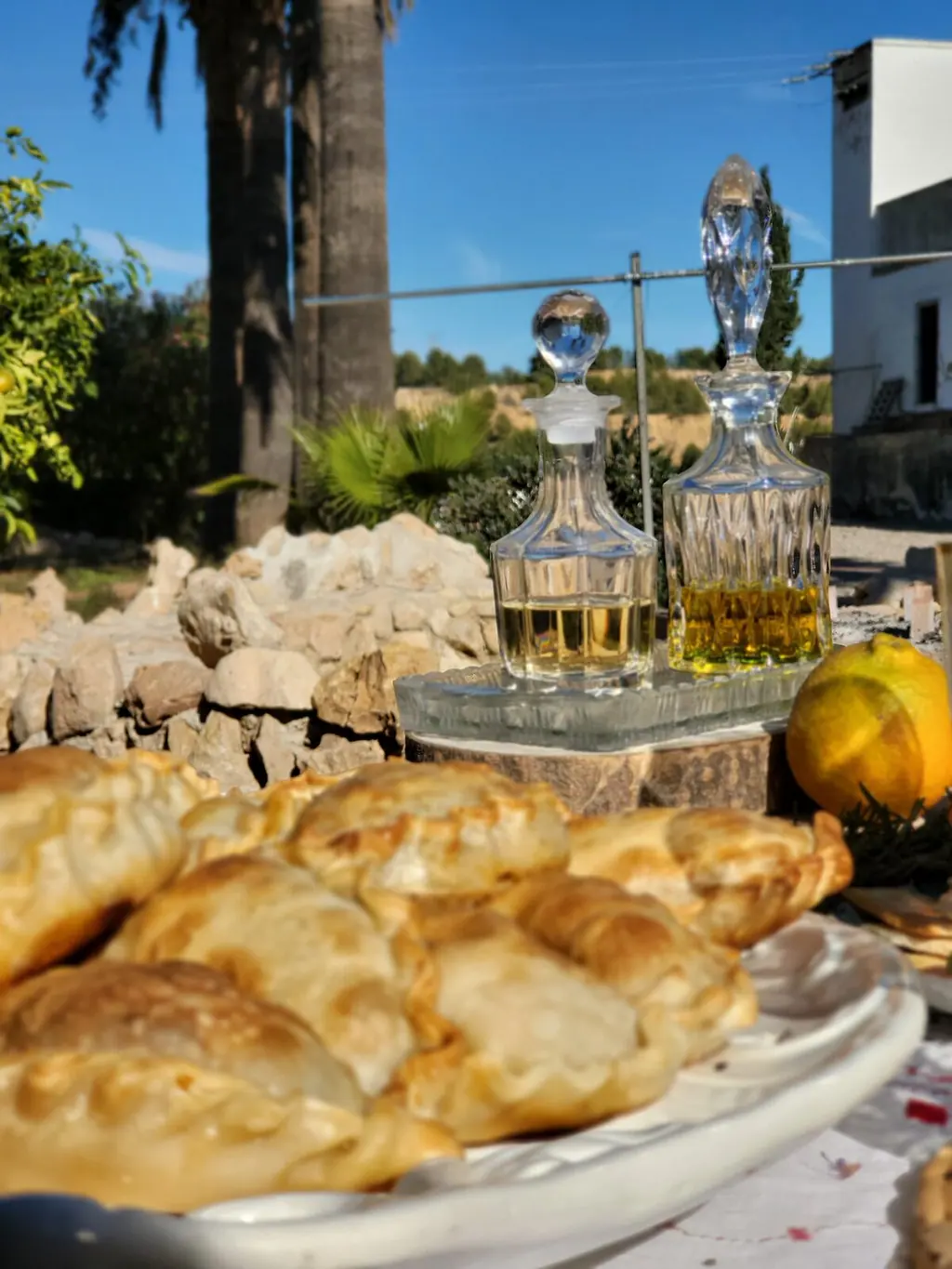
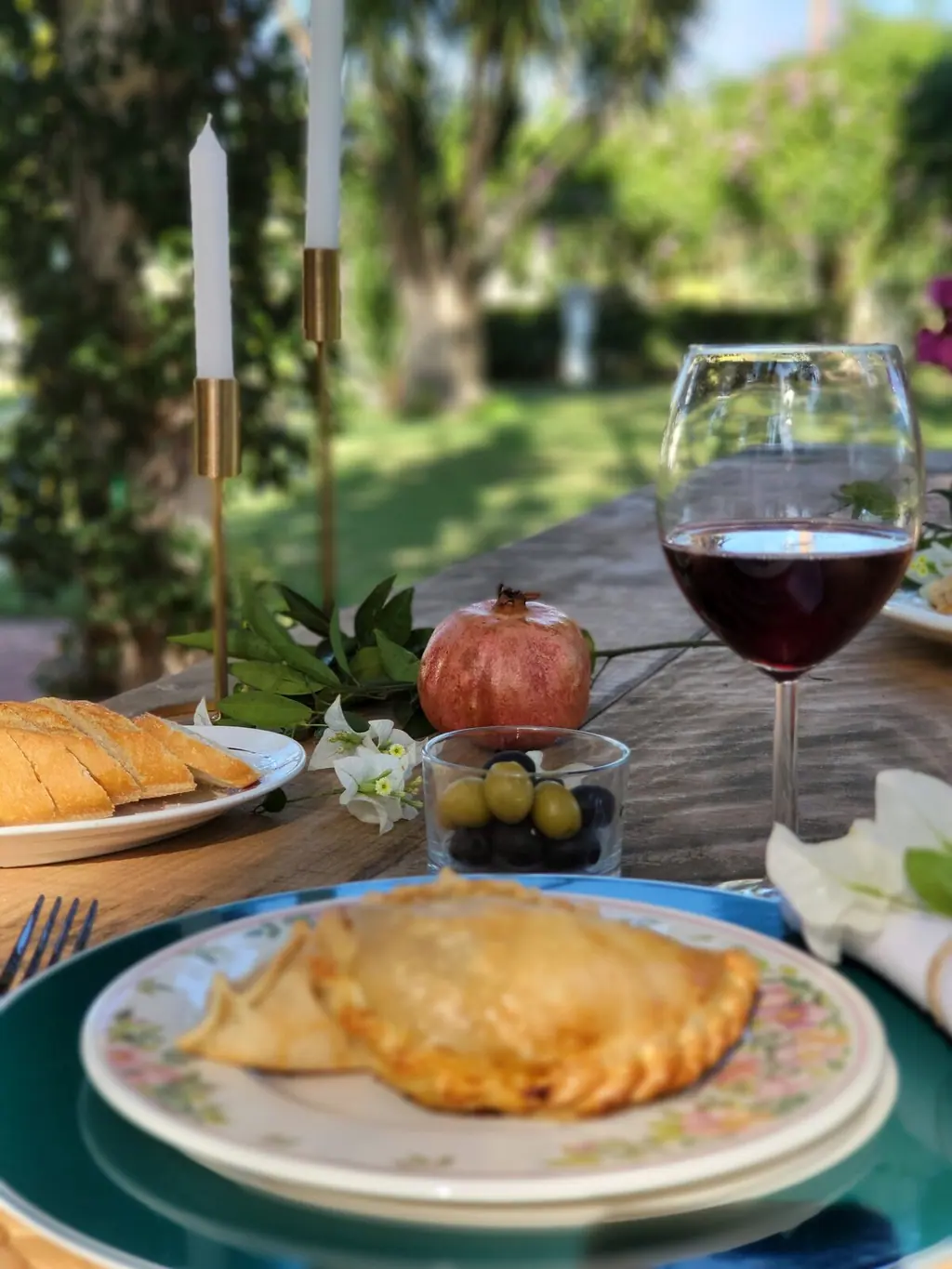
Argentinian empanadas
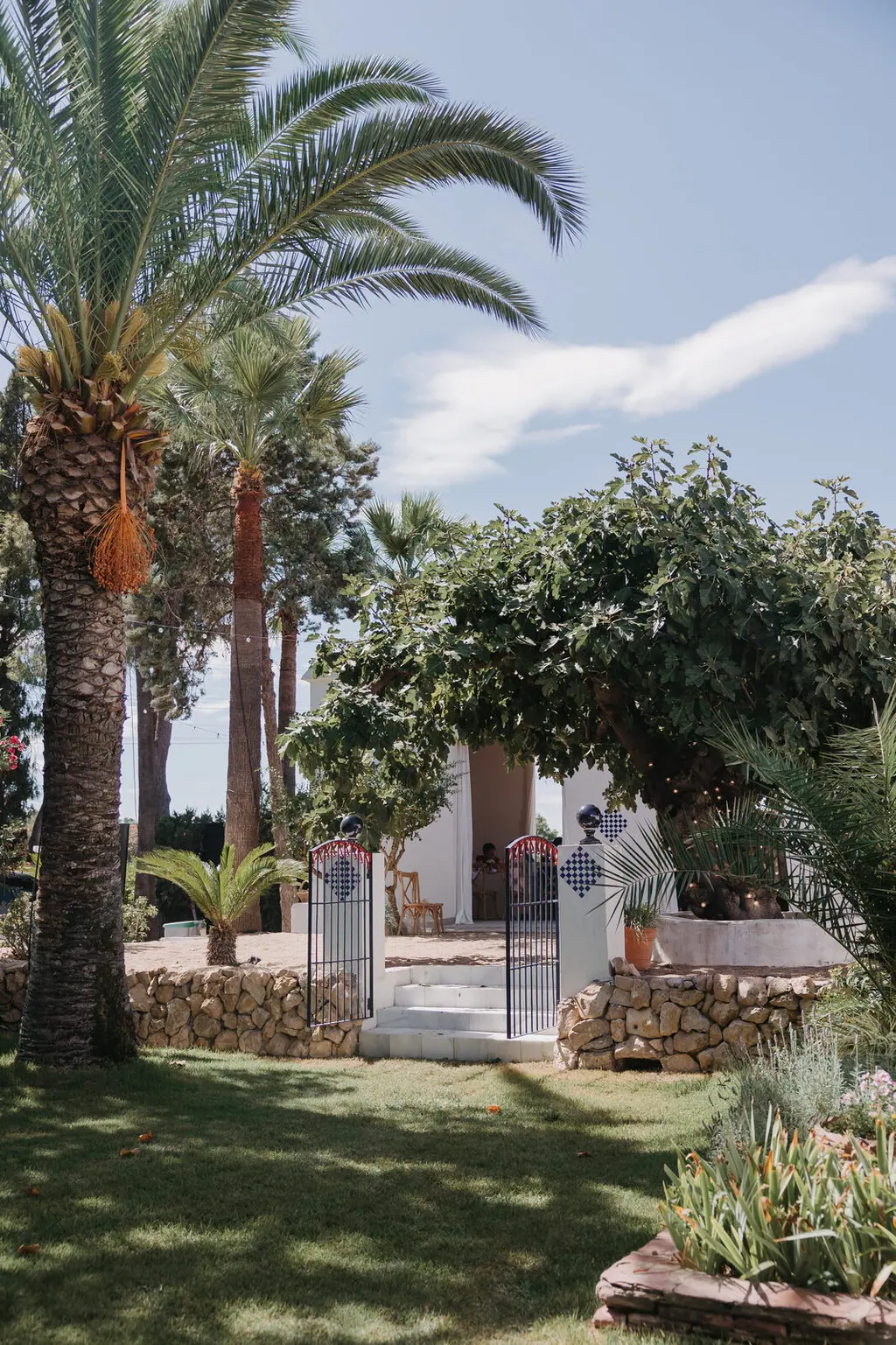
Homemade dough, pasture-raised beef cut with a knife and vegetables from the garden in the filling. Fried or baked in the wood oven, in the garden of a 16th-century villa fifteen minutes from Valencia.
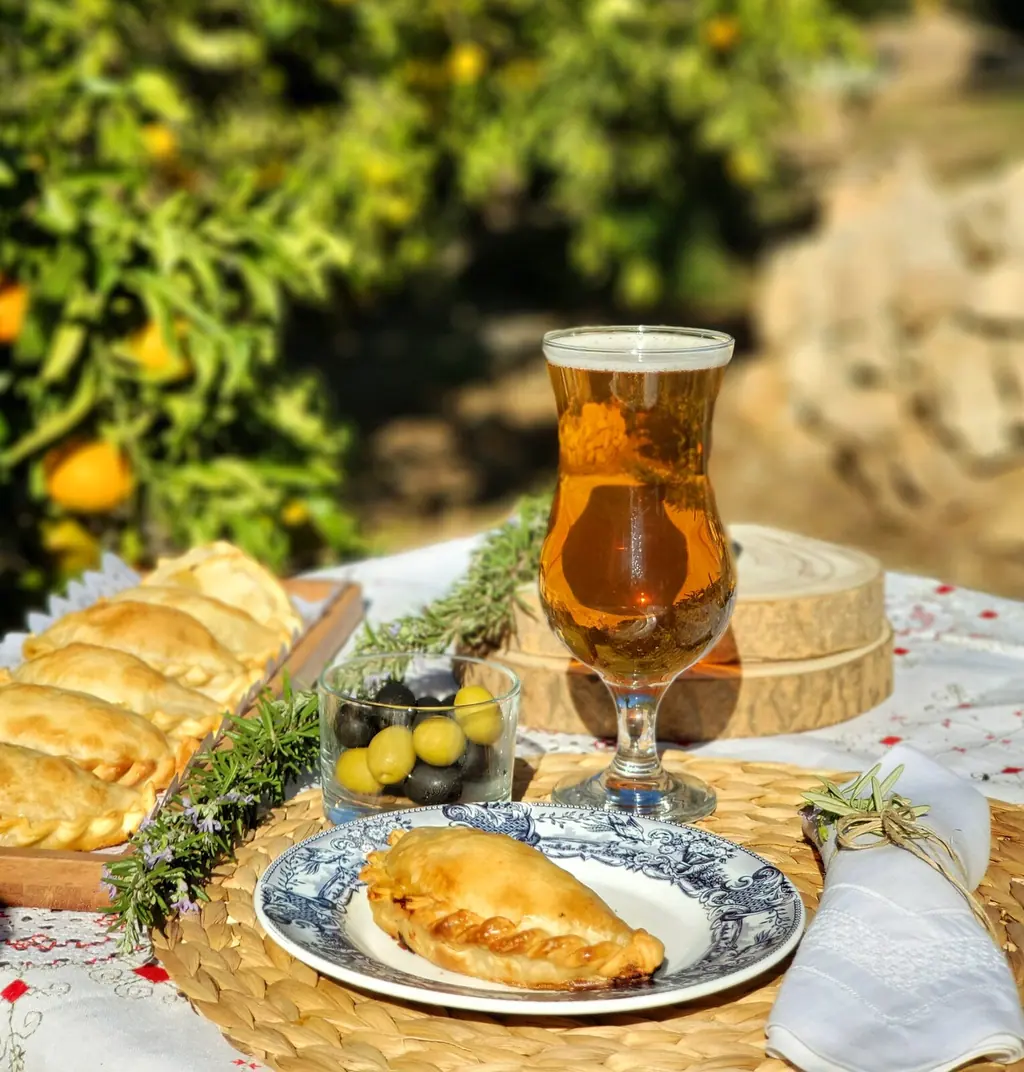
The filling
Pasture-raised beef, cut with a knife rather than minced. It’s more work and you notice it when you bite: the meat comes in distinct pieces instead of dissolving into a paste.
The rest of the filling is whatever the garden is giving that day. It isn’t a fixed recipe: it changes with the season, like everything else eaten here.
That’s the difference between a homemade empanada and a supermarket one. There isn’t another.
The dough
The dough is made here, with Italian flour. No ready-made discs: it’s kneaded, rolled and cut, which is why the edge is sealed by hand.
That crimped edge isn’t decorative. It’s what seals the empanada so it survives the oil or the oven without opening.
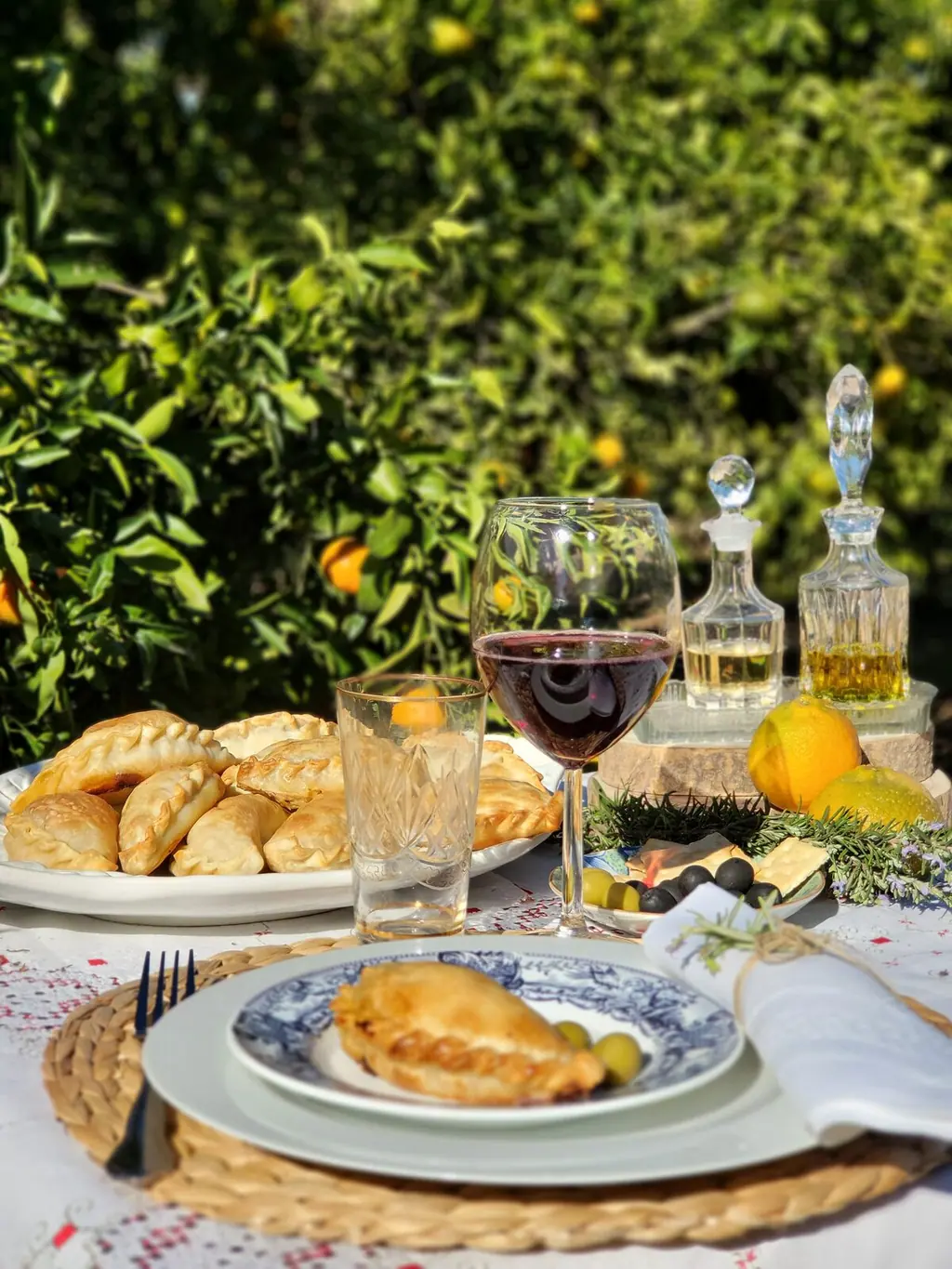
Two ways
The dough blisters and the edge goes crisp. It’s how they’re eaten in the north and how they’re asked for most.
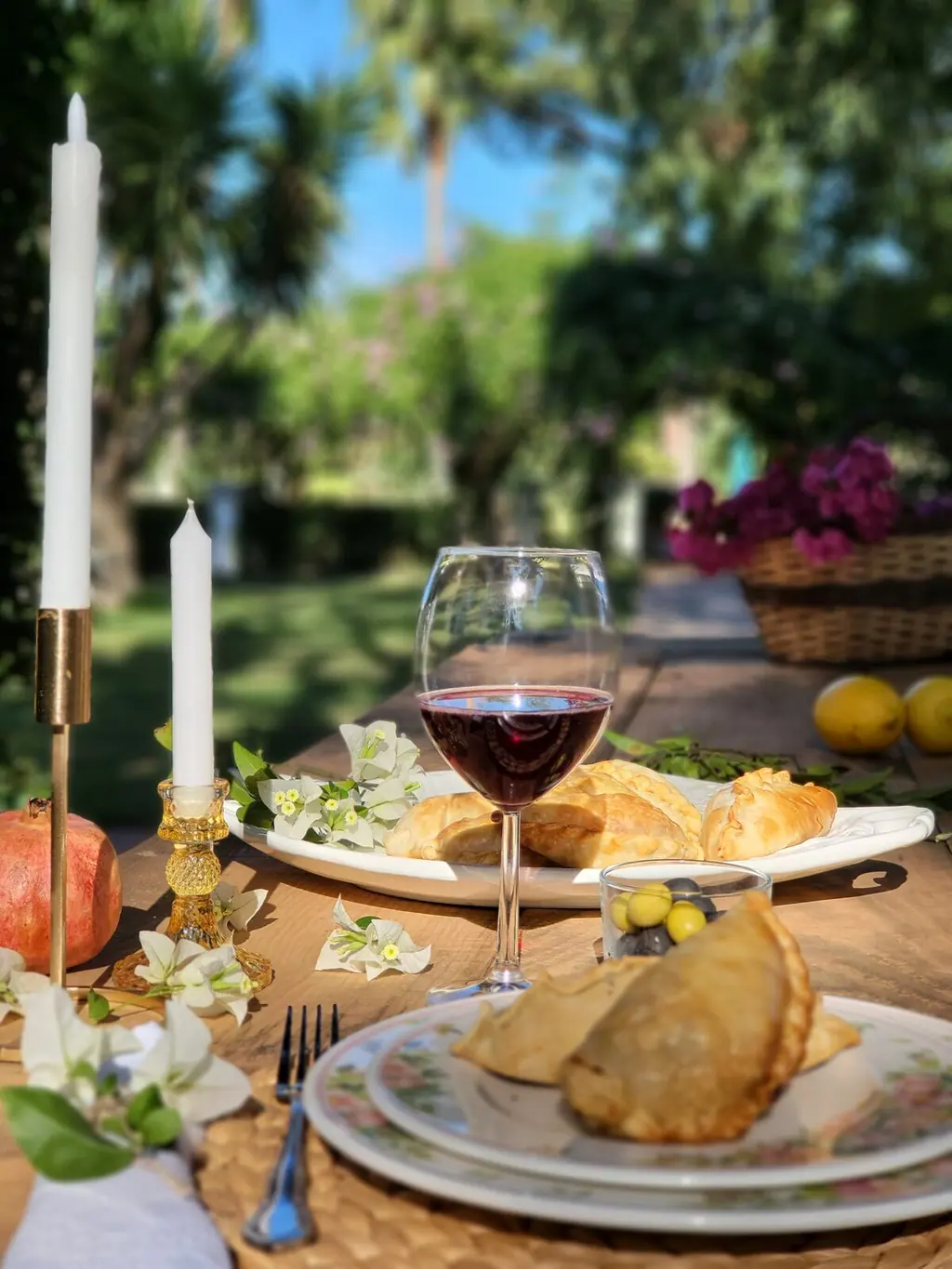
In the same clay oven as the pizza. Drier outside, with the taste of mandarin smoke.
You can choose either, or both, which is what usually happens.
At a glance
They’re eaten with your hands in four bites. Behind them is a whole morning.
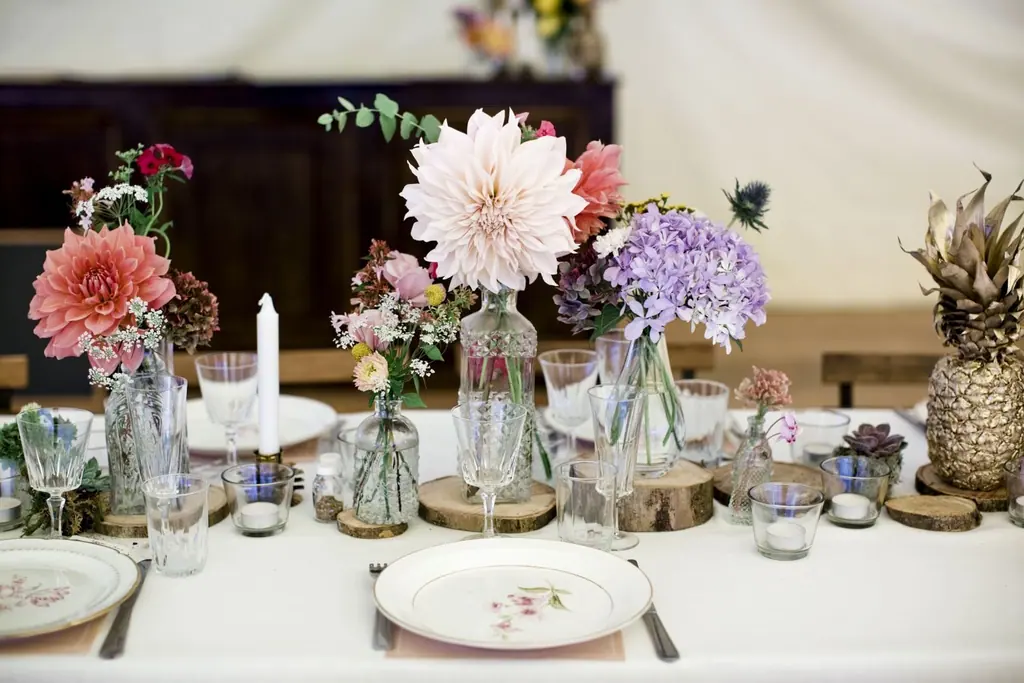
Always, at any meal
Linen, good china, crystal, cutlery and flowers cut from the garden that same morning. The table is laid for eating, not for a photograph.
Unlimited water, and up to two beers or two soft drinks per person. The wine is from Fontanars: red, white or rosé depending on what you’re eating and what you fancy.
And the table gets cleared. Nobody in the group lays it, nobody clears it and nobody washes up.
Before you write
No. The house is rented whole to one group and the cooking is part of the stay.
Both. They work as a full lunch and they work as the thing you eat standing in the garden before something else.
Yes. As well as the beef ones we make others depending on what’s in the garden, and we sort it out for anyone not eating meat. Tell us when you book.
Crimping the edge is one of the easiest things to learn and one of the most rewarding to do as a group. It isn’t compulsory: it’s up to whoever’s taking part.
Whichever the group prefers, and you can ask for both. Worth telling us beforehand, because the clay oven needs two hours to be ready.
R.S.V.P.
None of this has a form. You tell us on WhatsApp and it’s sorted before you arrive.
If you want them baked, tell us beforehand: the clay oven takes two hours to be ready.
Where it happens
The house is over five hundred years old, five minutes from Valencia airport and fifteen from the centre. Seven bedrooms, five bathrooms, a private pool and 4,500 m² of garden, always for one group at a time.
A 16th-century historic villa
The whole house as a holiday rental
+34635676888
WhatsApp or phone
Check-in from 3 pm
Check-out by 10 am
Valencia airport: 5 min
Valencia city centre: 15 min
CV-ARU000608-V
Official five-star classification
Have you stayed with us? It helps us a lot if you say so.
Follow us on InstagramLeave your review on Google