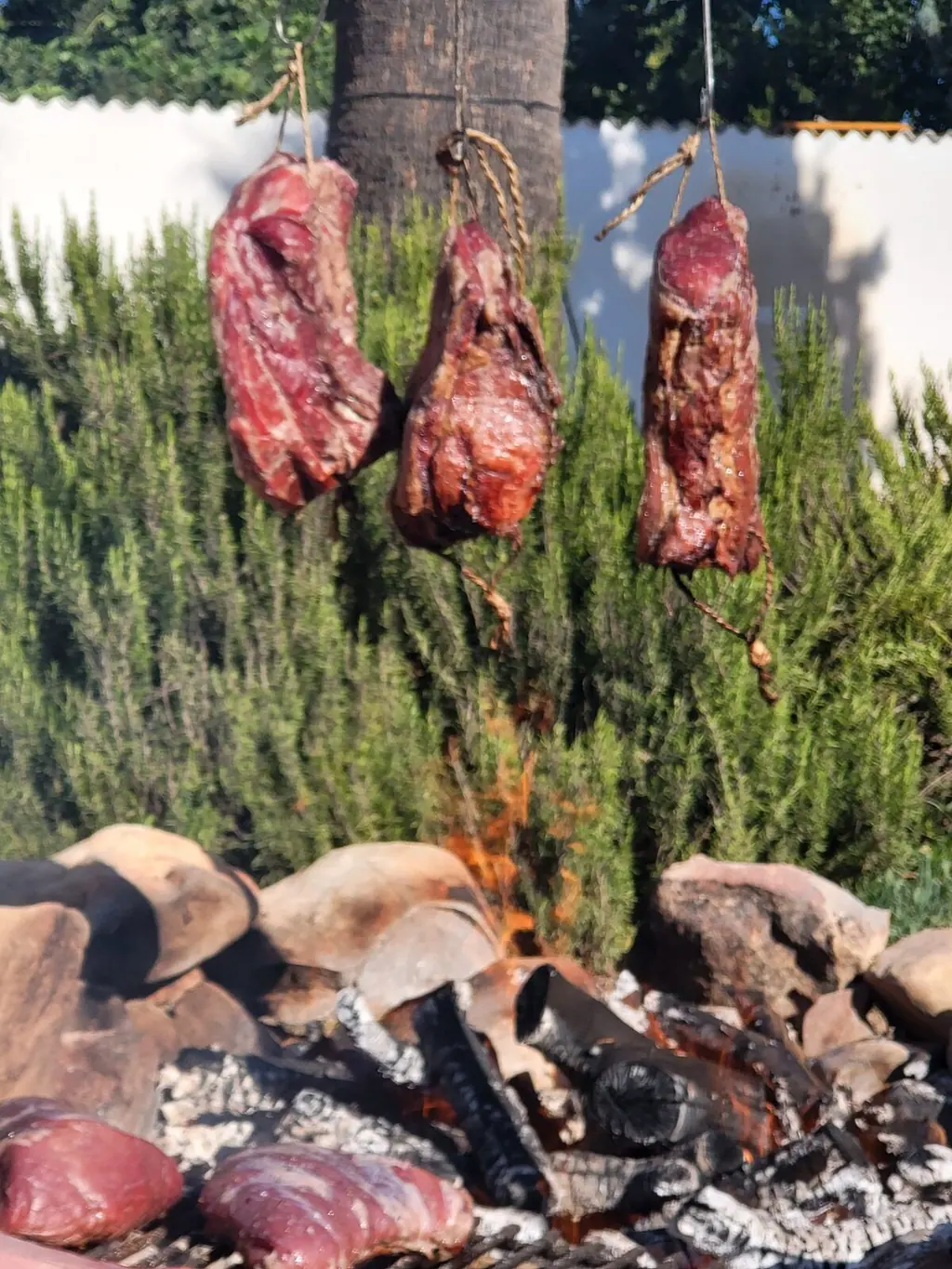
The smoke
There’s no way to get it but waiting
Six hours over embers.
A hundred and twenty kilos of mandarin wood.
A fire lit before dawn.
None of that is visible when the food reaches the table. It’s what makes it taste the way it does.
At a glance
What happens that day
The first things off the fire
Argentinian chorizo and morcilla, the first things off the fire.
The meat
Always at least two cuts, on heated steel plates.
The dessert
Homemade, with eggs from our own hens.
It gets cleared
The clearing up is ours too. All you have to do is enjoy it.
If it’s cold the fire gets lit. If it’s hot, the air conditioning. And if the afternoon is kind, the table goes out in the garden.
Slow-smoked asado
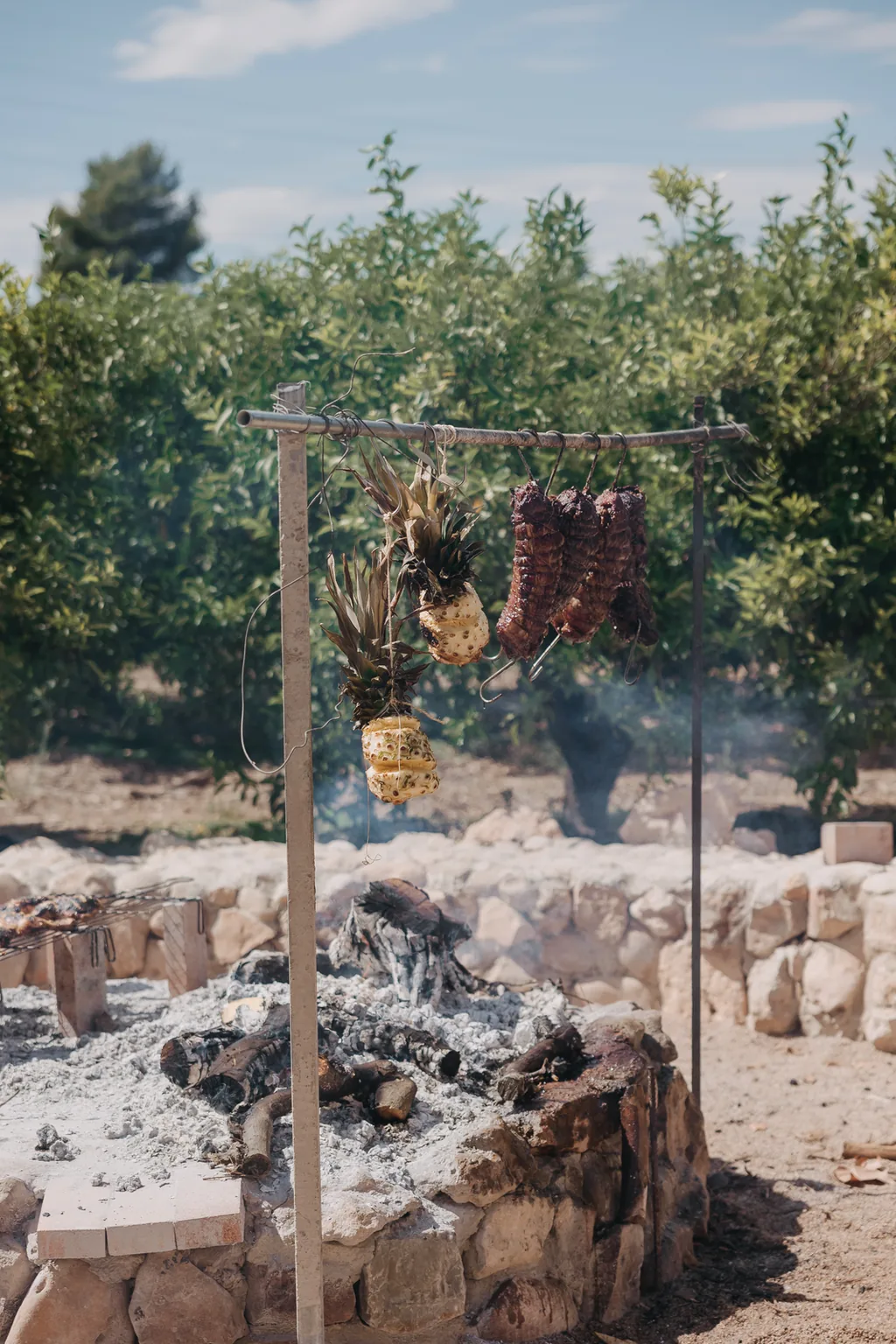
Meat hung over embers, cooked with time
In the garden of a 16th-century villa fifteen minutes from Valencia. This isn’t a quick barbecue: the meat is hung over the fire and left there for as long as it takes.
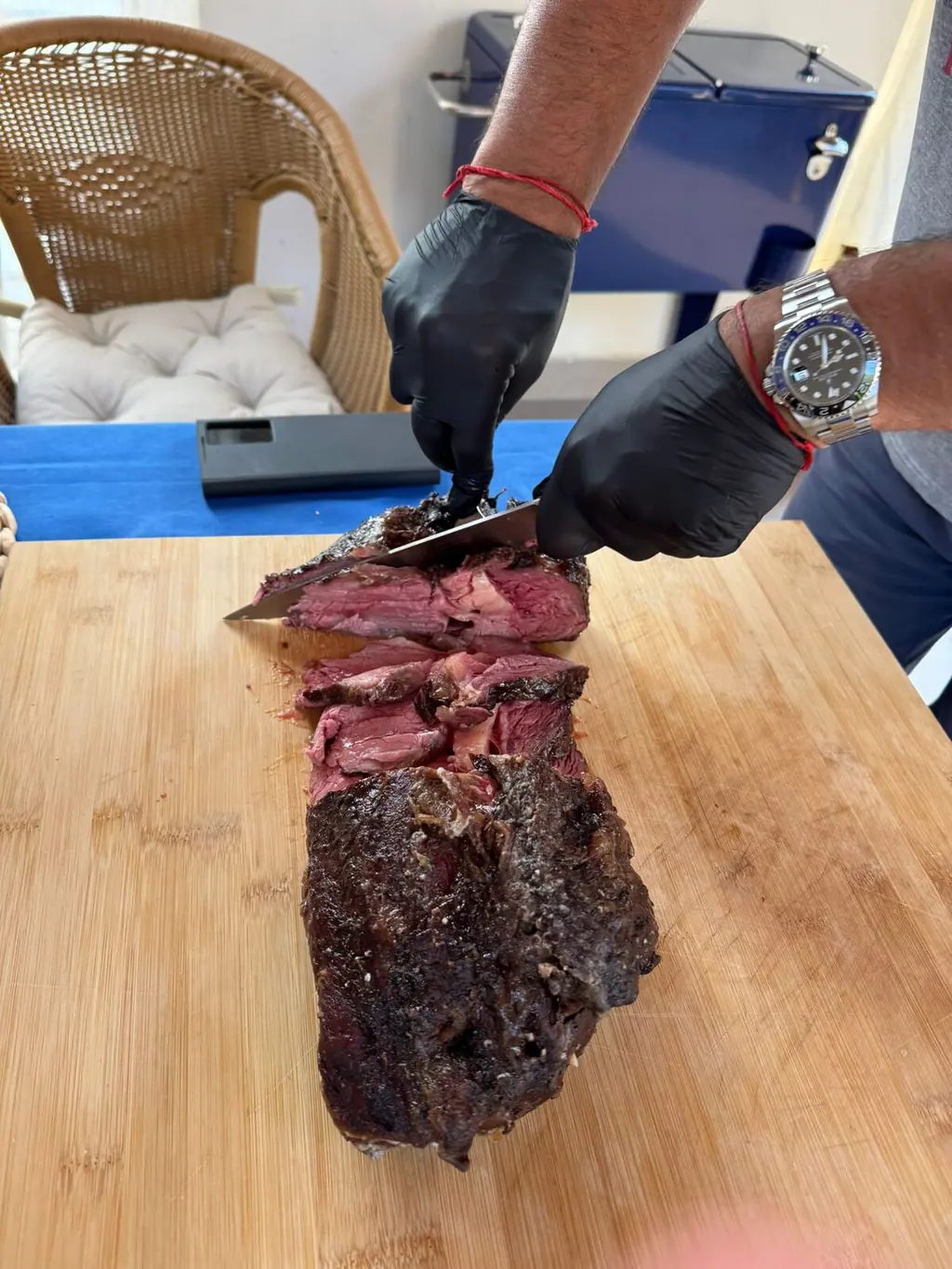
Where it comes from
A tradition that wasn’t invented here
This comes from northern Argentina, from working where what goes on the fire is wild boar or peccary: cuts that aren’t dealt with in twenty minutes and need hours to soften.
Everything else follows from that: hanging the cut rather than pressing it onto a grill, letting the smoke do the work, not being in a hurry. It was learned from people who had always done it that way, long before it became fashionable and acquired a chef’s name.
It isn’t a copied recipe: it’s the recovery of a way of cooking that already existed. The result shows in the texture, which is the part you can’t fake.
What goes on the fire
Argentinian pasture-raised beef
Organic, from pasture-raised animals, which is what lets it take six hours of fire without drying out. Usually rump and sirloin, and depending on the day there may be tomahawk, lamb or milk-fed lamb.
It’s chosen beforehand, with the group, because not every cut asks for the same thing or takes the same time.
Pasture-raised meat has different fat and different fibre. On a quick grill it makes no difference; hung for six hours over embers, it’s the difference between tender and dry.
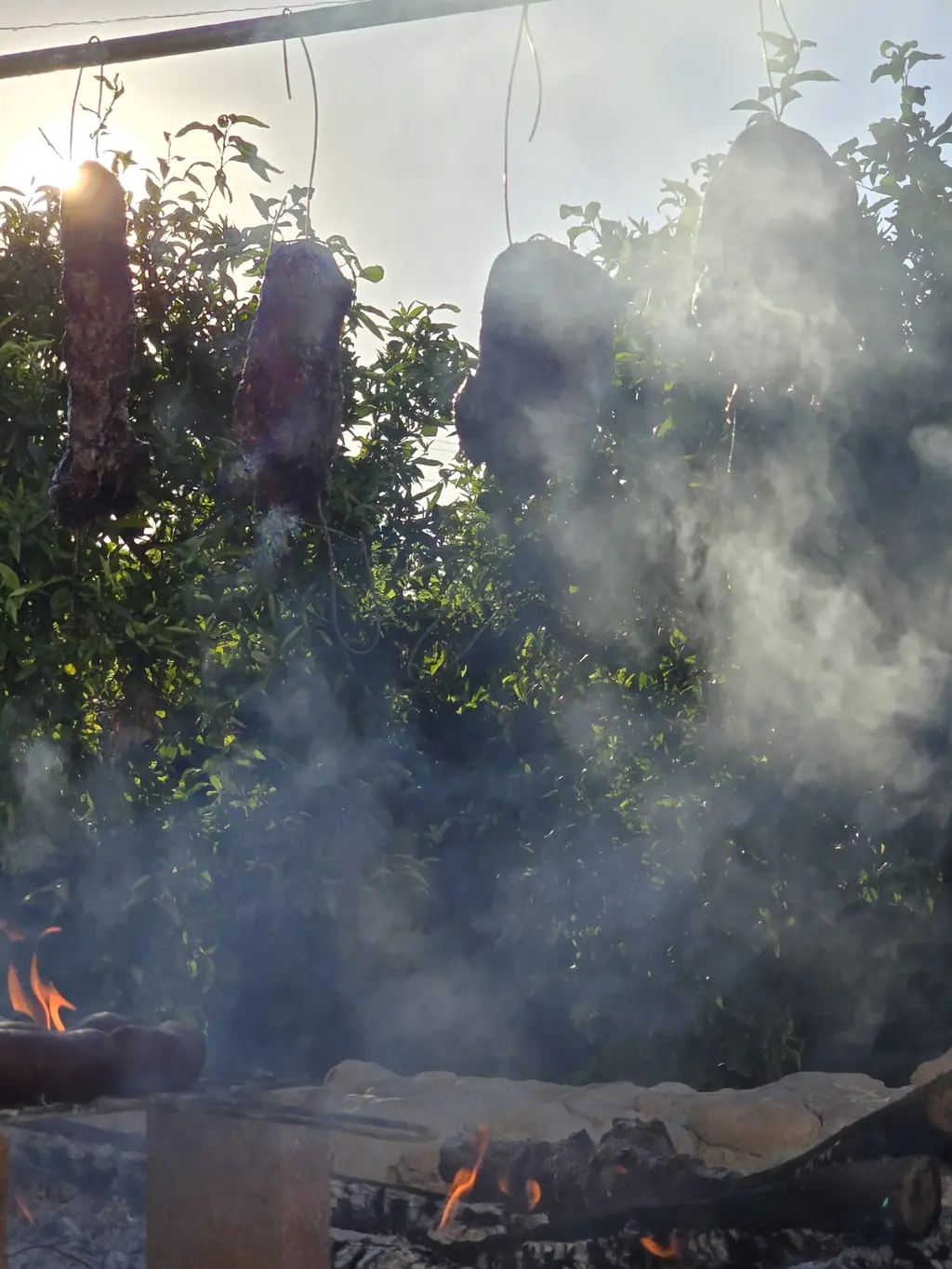
How it unfolds
The fire is lit long before anyone eats
There’s no fixed script. This is what usually happens, and every group joins in as much as it fancies.
A hundred and twenty kilos of wood
Mandarin wood only, set aside and stored for months for this. The fire is lit before dawn, because what cooks isn’t the flame: it’s the embers left afterwards.
Chorizo and morcilla
Argentinian, and the first things off the fire. Eaten standing in the garden with a cold drink, while the large cuts stay hanging.
A place built for this
Each cut hangs over the embers at a calculated height, not resting on a grill. The fire pit was built for it: cooked through inside, not burnt outside, for six hours minimum.
What goes with it
Vegetables over the fire and whatever the garden is giving at the time. In season, the tomato comes from here.
The table talk afterwards
Which is half the afternoon, because nobody has to drive home.
What reaches the table
A whole meal, not just meat
It starts with Argentinian chorizo and morcilla, off the fire long before the rest. Then the meat, whatever the garden gives that day, and a homemade dessert made here.
Nothing arrives pre-made to be warmed through. It’s cooked here, in front of the group, all afternoon.
If someone doesn’t eat meat, tell us when you book and it gets sorted without making it a problem for the rest.
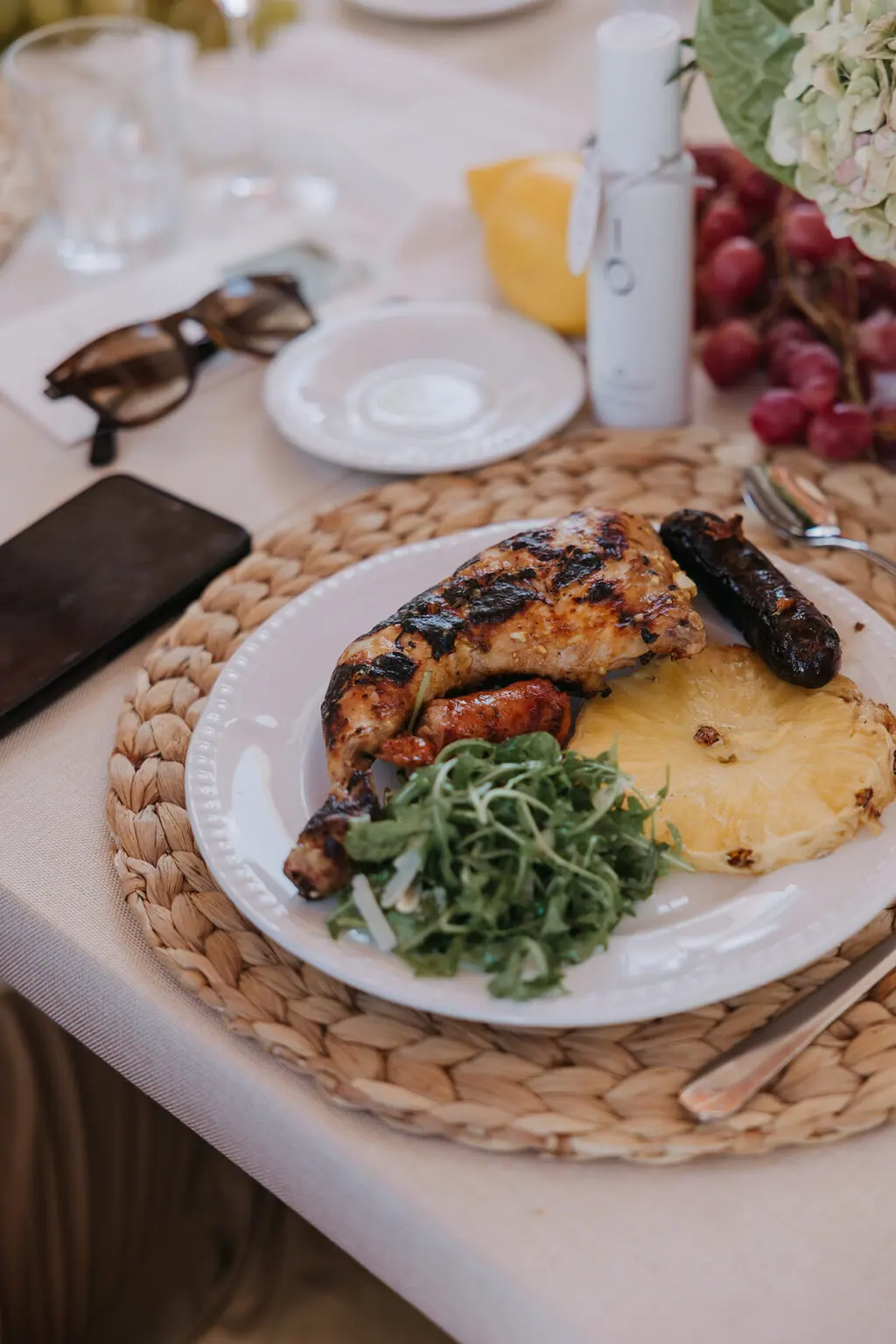
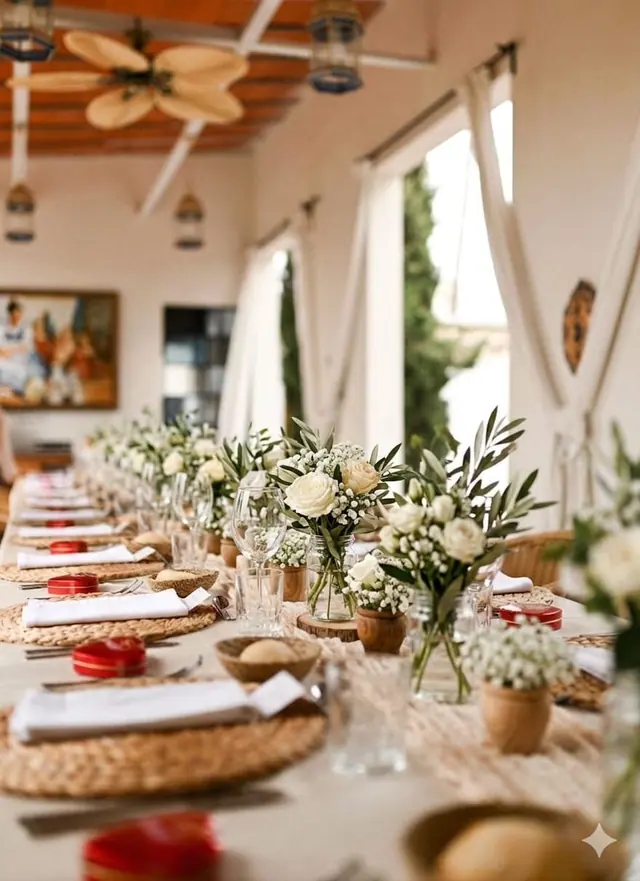
Always, at any meal
The meal doesn’t end on the plate
Linen, good china, crystal, cutlery and flowers cut from the garden that same morning. The table is laid for eating, not for a photograph.
The meat comes with heated steel plates, carried to the table so the asado stays hot down to the last slice.
Unlimited water, and up to two beers or two soft drinks per person. The wine is from Fontanars: red, white or rosé depending on what you’re eating and what you fancy.
And the table gets cleared. Nobody in the group lays it, nobody clears it and nobody washes up. That’s what separates eating in a rented house from eating at home.
Before you write
The questions we get most
Can we book the asado without staying?
No. The house is rented whole to one group and the cooking is part of the stay.
How long does it last?
The meat is on the fire for six hours minimum, so it’s lit in the morning to eat in the afternoon. The table talk afterwards is part of it, not the end of it.
Do we have to do anything?
Nothing is compulsory: it’s up to whoever’s taking part. You can be at the fire, watch with a drink in your hand, or turn up when it’s time to eat.
For how many people?
From seven, which is the minimum group for the house.
What meat is it?
Organic Argentinian beef, from pasture-raised animals. Usually rump and sirloin, and depending on the day there may be tomahawk, lamb or milk-fed lamb. Chosen beforehand, with the group.
What’s included?
The food and drink, and the whole table service: linen, china, glasses, cutlery and flowers from the garden. The clearing up afterwards too.
R.S.V.P.
What to ask for in advance
None of this has a form. You tell us on WhatsApp and it’s sorted before you arrive.
The fire is lit hours ahead, so we need to know the mealtime in advance.
Where it happens
A 16th-century villa, entirely yours
The fire is in the garden of a five-hundred-year-old house, five minutes from Valencia airport and fifteen from the centre. Seven bedrooms, five bathrooms, a private pool and 4,500 m² of garden, always for one group at a time.