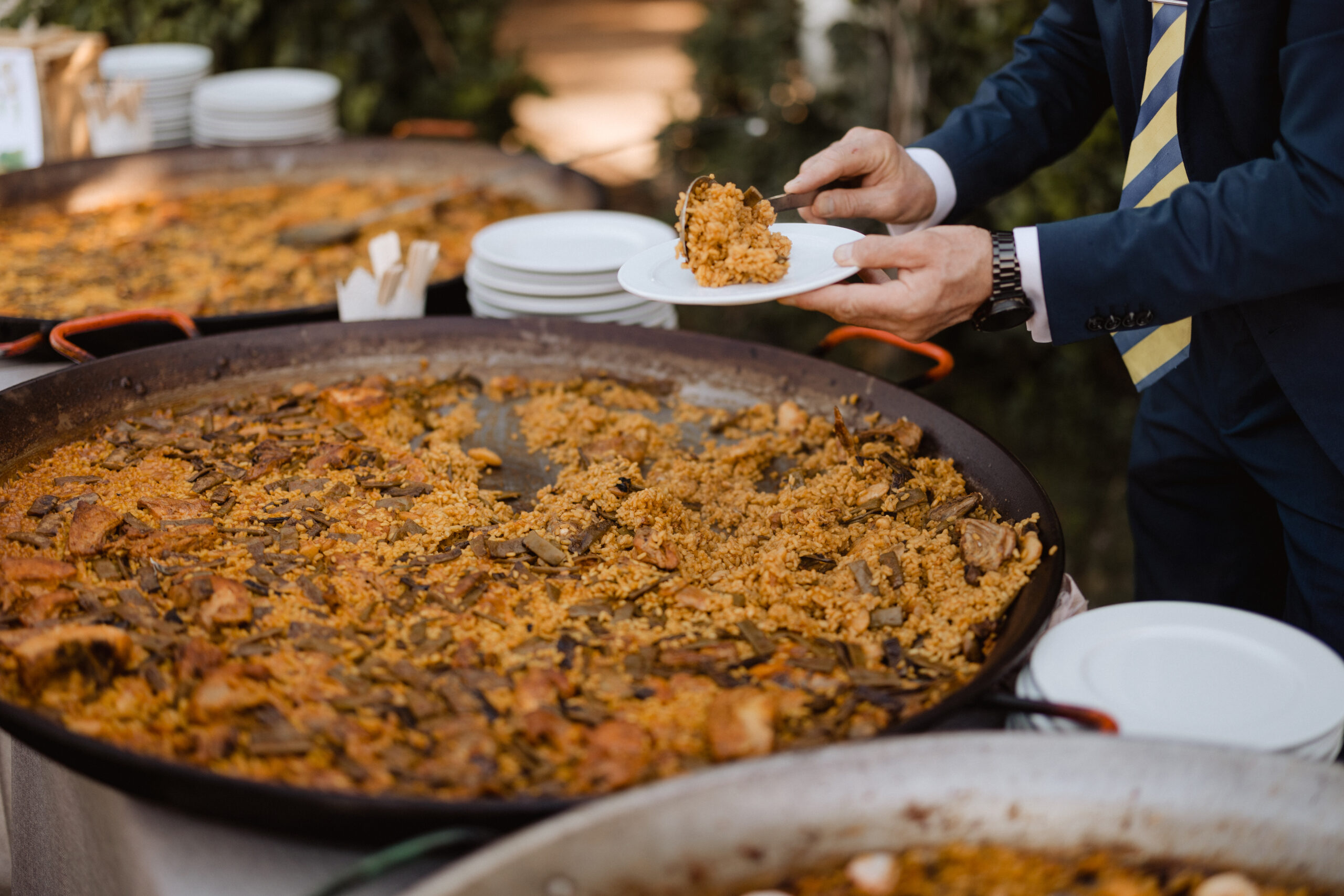
The paella
A Valencian paella class in a 16th-century villa
Fifteen minutes from Valencia, with the whole house to your group. Three to five hours around the fire, with an aperitivo, a starter, the paella, a homemade dessert and wine. No food colouring and no shop-bought stock.
First of all
This isn’t a standalone class
The paella is for groups staying at the house. It isn’t sold separately or per person: the house is rented whole to one group and the cooking is part of the stay.
From seven people, which is the minimum group for the house. Five is possible too, if the group covers the cook’s minimum.
We say it up here so nobody wastes their time: if you want a two-hour class in the city, you’ll find better options in Valencia. This is something else.
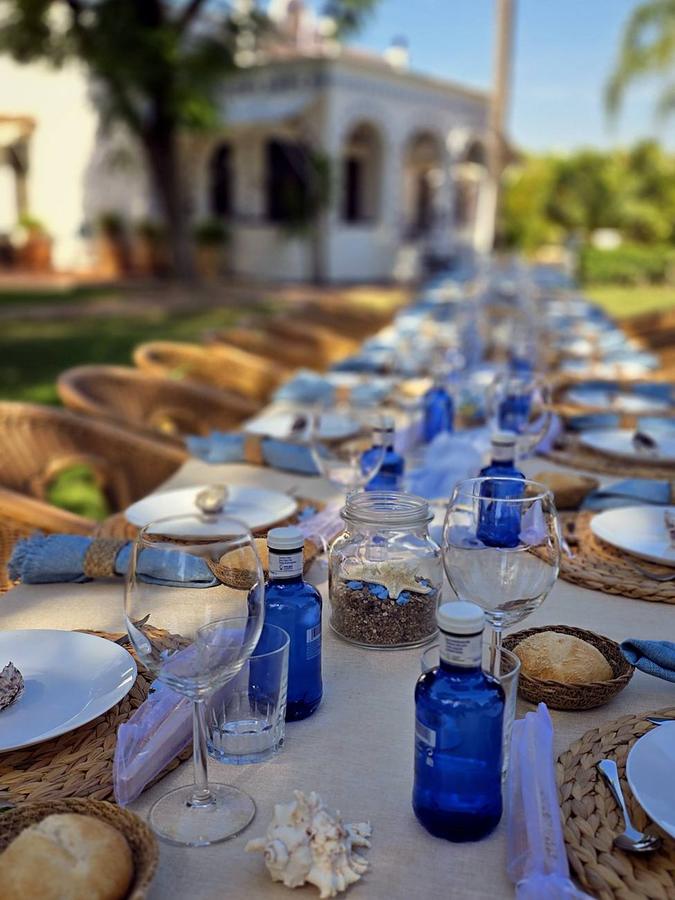
Three to five hours
How the day goes
There’s no fixed script. This is what usually happens, and every group keeps the parts it fancies.
The market, if you fancy it
Some groups start at the Mercado Central, shopping with José. He moves around it like it’s his own kitchen, and that hour teaches you more about Valencian cooking than the whole class.
It starts with eating
It always begins with an aperitivo and a cold drink: Teruel ham, cheeses and olives. The ham comes from one particular place a hundred and thirty kilometres away, and we go and get it.
The starter
Valencian tomato peeled by hand, filled with burrata, with a reduction of garlic, parsley, olive oil, pepper and salt. In season, the tomato comes from our own garden.
The paella
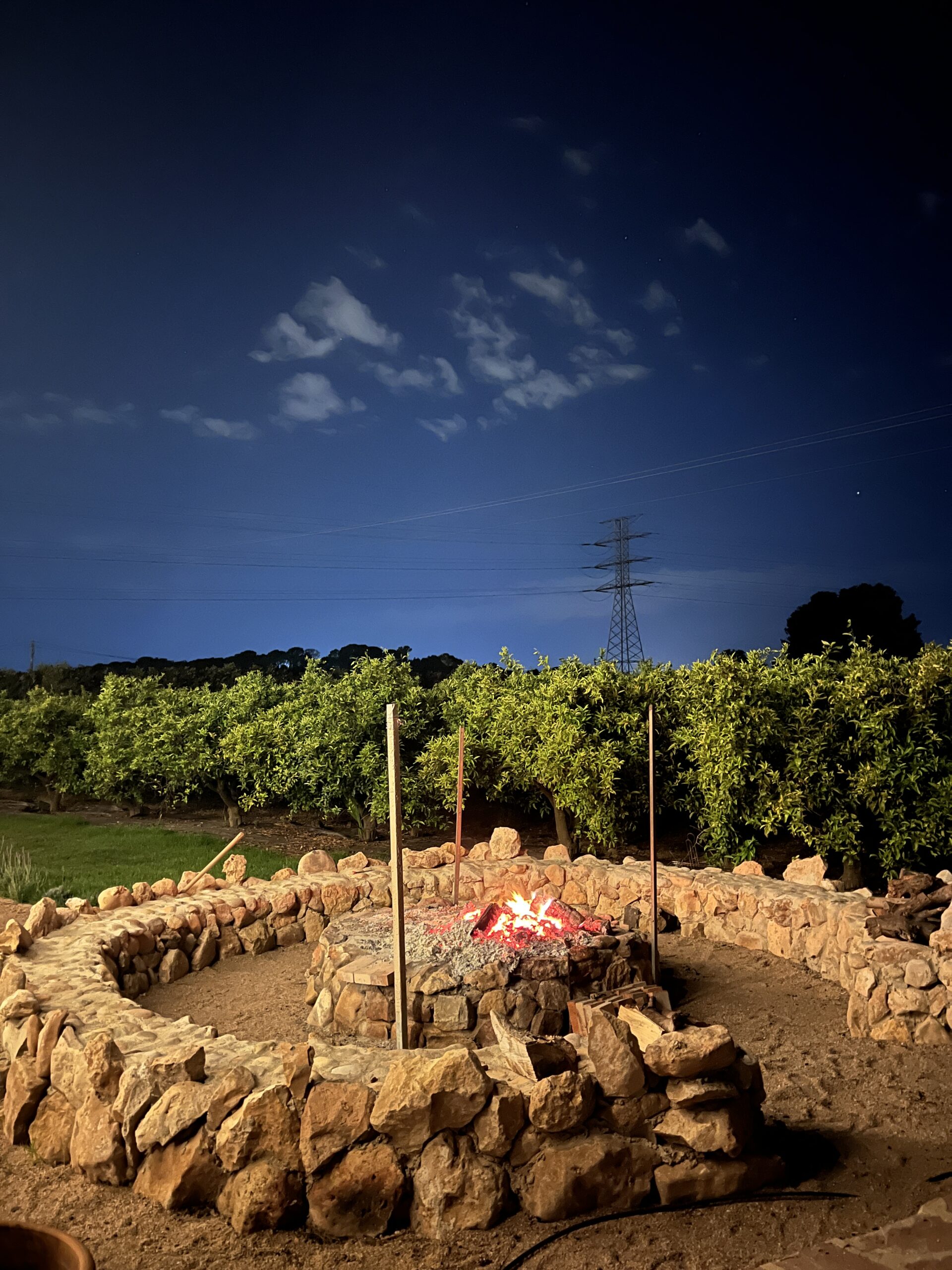
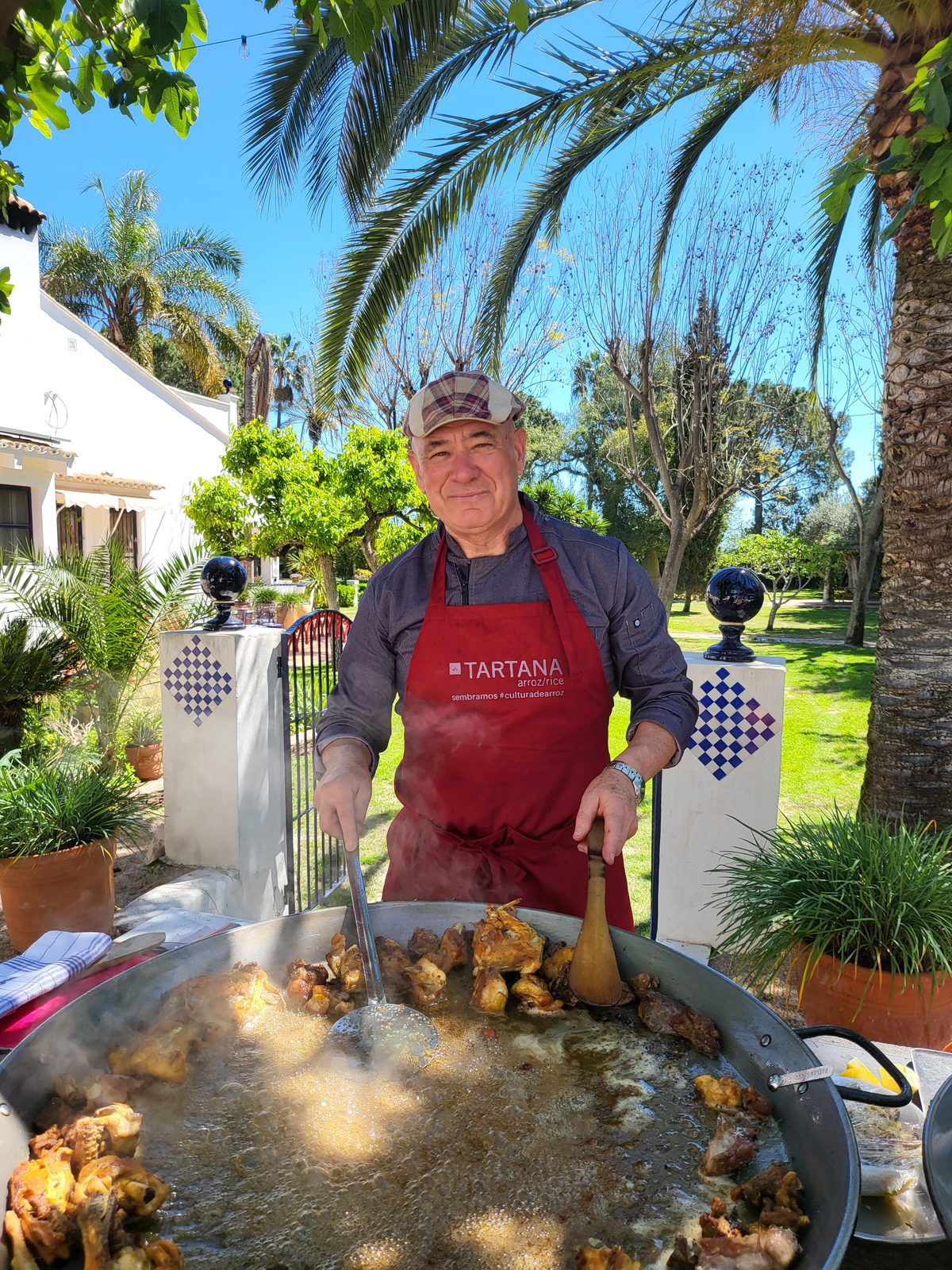
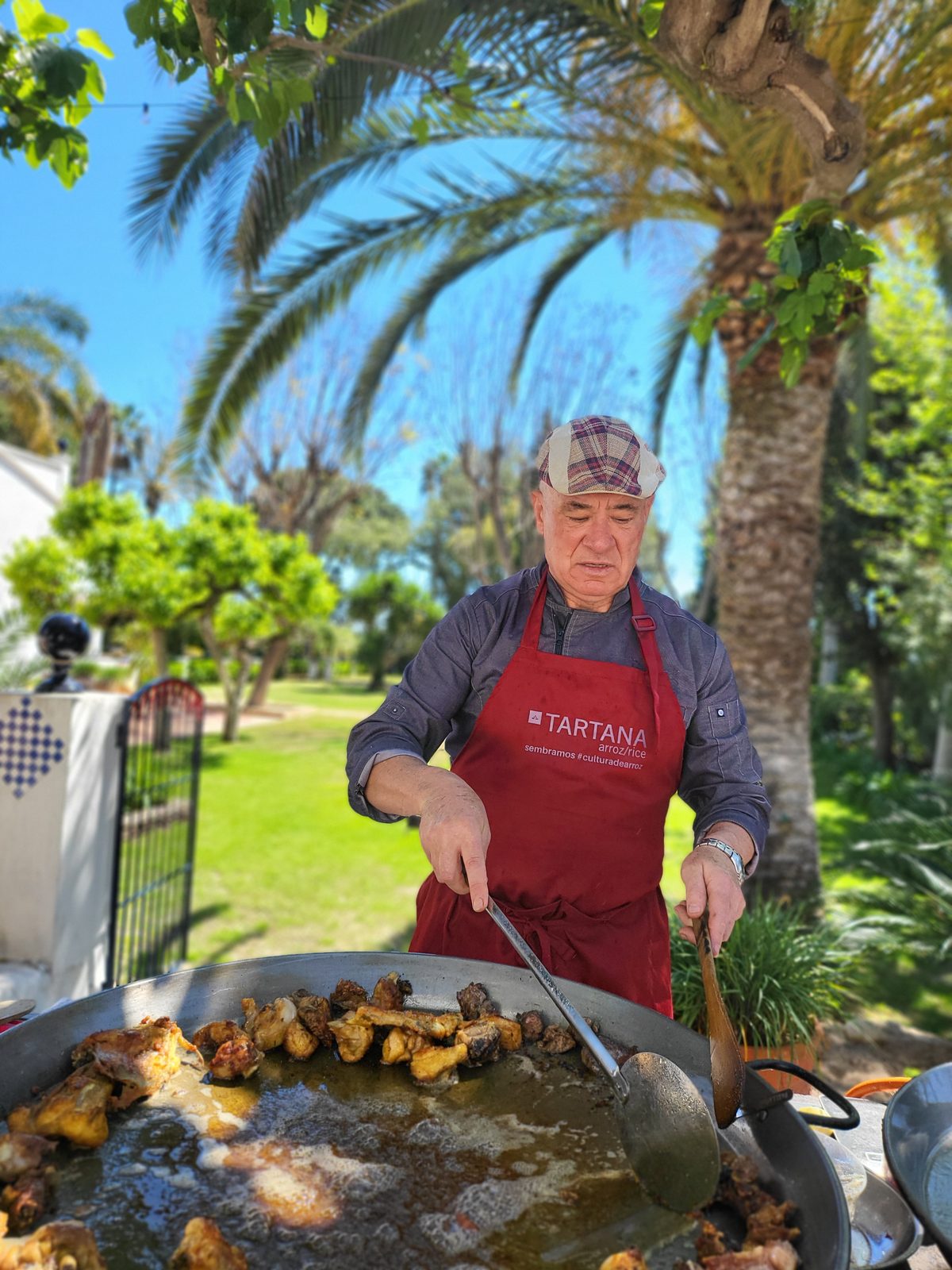
The fire is lit and the cooking starts. José invites you in and explains each step, and everyone decides how far they want to go: nothing is compulsory, it’s whatever you feel like.
The dessert
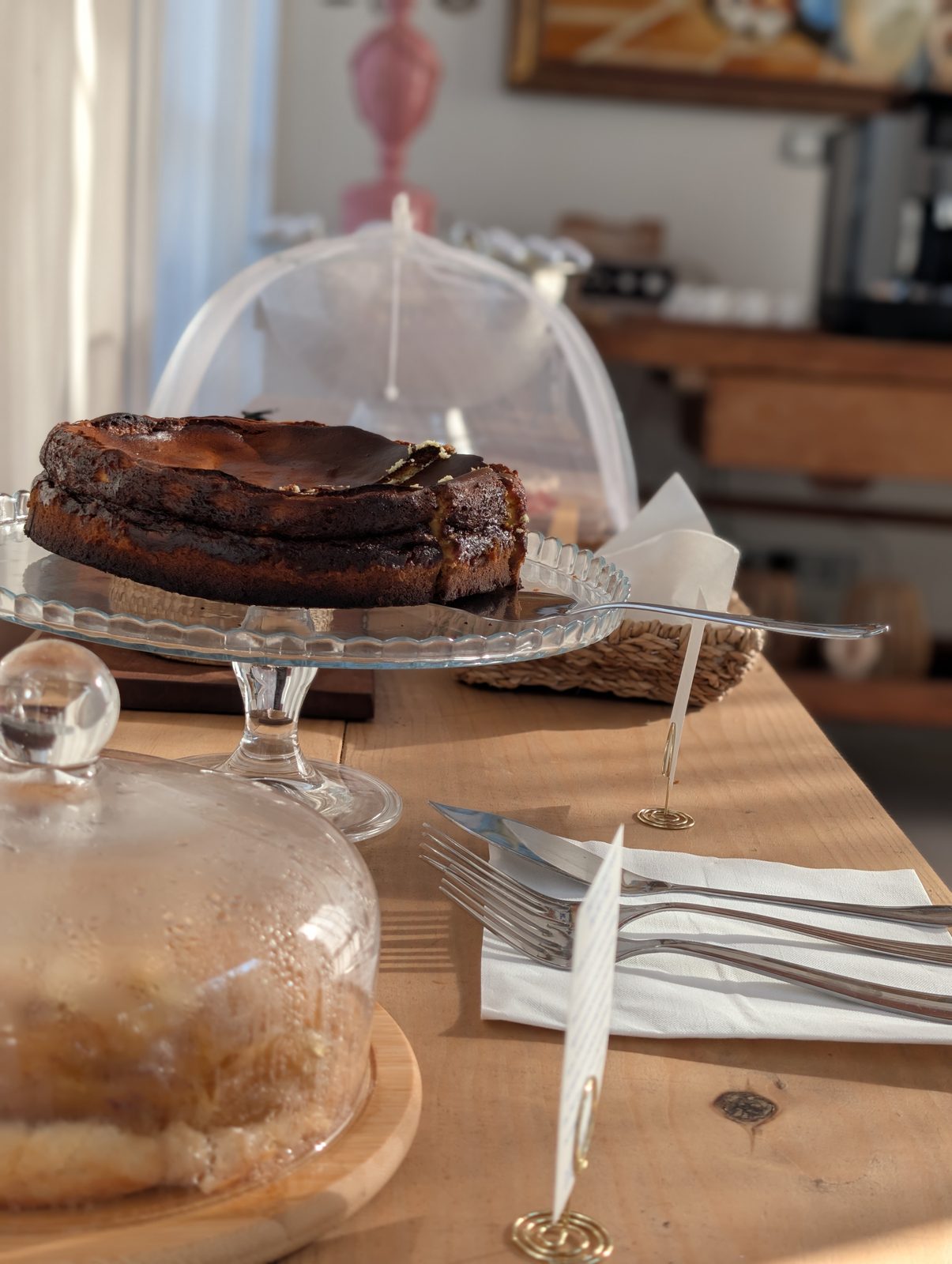
Homemade. Flan with eggs from our own hens, apple tart with vanilla ice cream, or pears in red wine with ice cream made from the same wine.
The table talk afterwards
Which is half the time and the reason it lasts three to five hours. Nobody watches the clock because nobody has to drive home.
Who makes it
José doesn’t cook a paella: he researches a dish
He makes the real Valencian one, with chicken, duck and rabbit. He works with recovered rice varieties and with the traditional method, refined by him through years of study.
He measures the point at which the oil breaks. He compares how much flavour each variety of grain absorbs. He adjusts how long the rice needs to reach its point. You don’t improvise that in an afternoon: it’s years behind a single dish.
That’s why this paella brings a hundred and fifty years of tradition to the table, rather than a copied recipe.
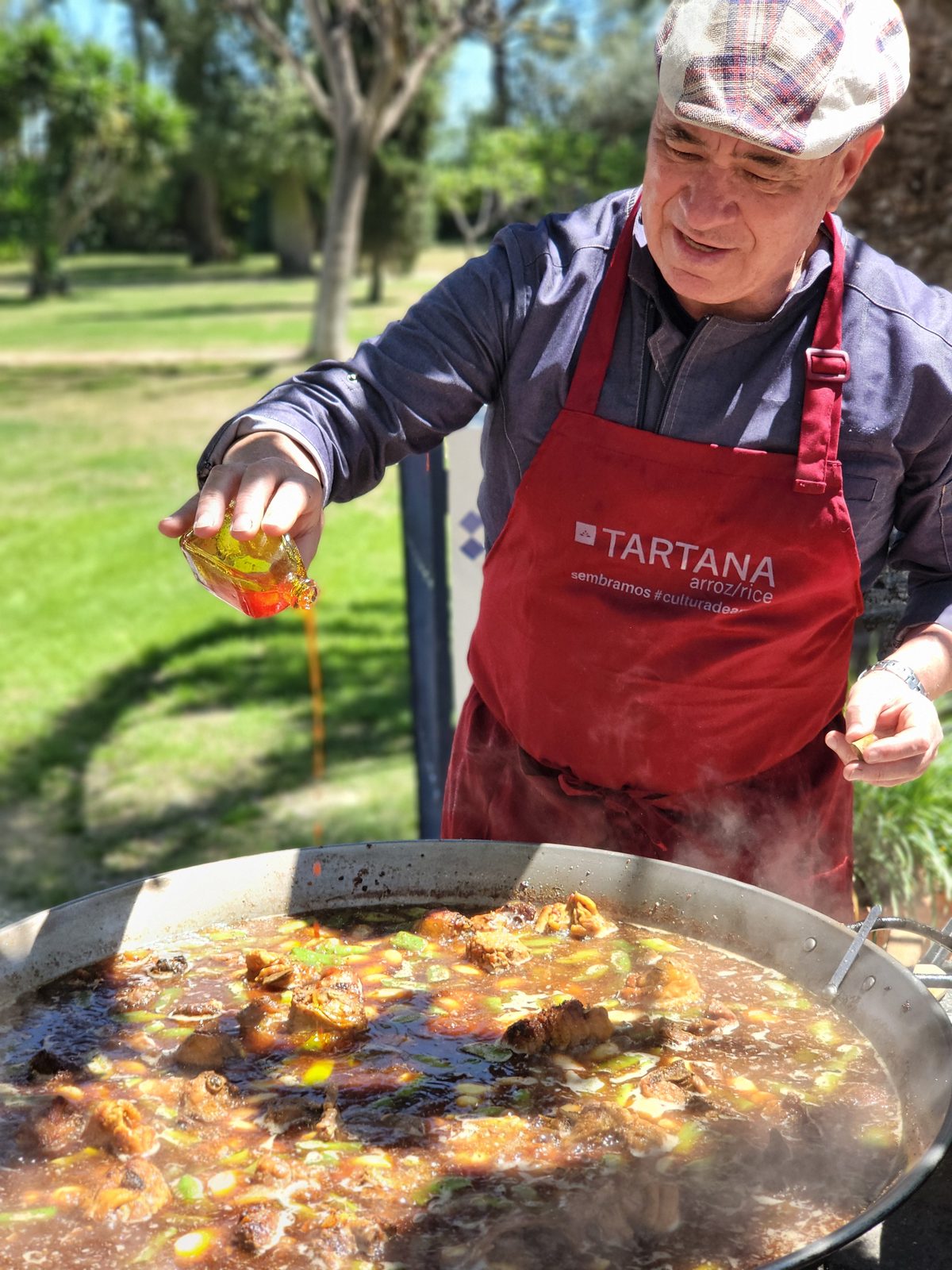
The difference is in what it doesn’t contain
No food colouring and no shop-bought stock
The colour of this paella comes from saffron, not from a sachet. The stock is made here, not opened. Those are the two things that separate a real paella from a tourist paella, and almost nobody mentions them because not everyone can.
The tomato in the sauce comes from the garden. Every year they’re preserved whole and peeled by hand, and the sauce is made when it’s needed. The eggs in the dessert come from our own hens.
Villa Paula isn’t a restaurant. It’s a house that has been cooking for five centuries, and that shows above all in what doesn’t get used.
From start to finish
A whole meal, not just a paella
The usual paella class is: the cook turns up, the rice gets made, and that’s that. Here the day starts with the aperitivo and ends with the table cleared.
A drink from the first minute
Cold, and nobody’s counting glasses. The Fontanars wine comes with the meal.
Aperitivo and starter
Teruel ham, cheeses and olives. And the Valencian tomato with burrata, which isn’t a side: it’s a dish.
Homemade dessert
Made here, with eggs from our own hens.
The table laid and cleared
Nobody in the group lays the table or clears it. Nobody washes up either.
Nothing reheated
Everything is cooked here and on the spot. Nothing arrives pre-made to be warmed through.
The rice matters
Short-grain varieties made for paella, of the Garbel type, all from Tartana. The rice is half the dish and not all of it will do.
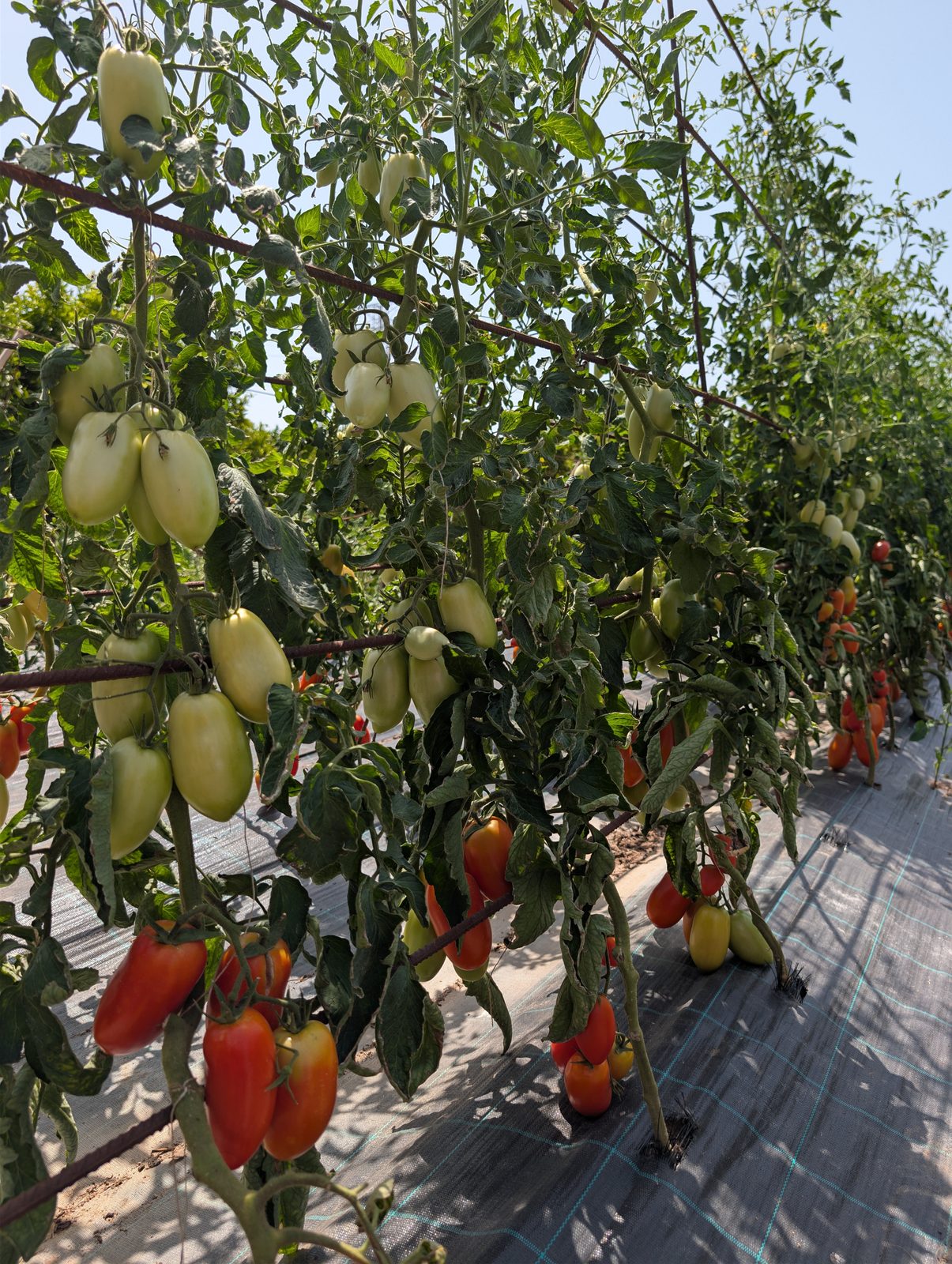
The garden
The tomato in the starter and in the sauce comes from here in season.
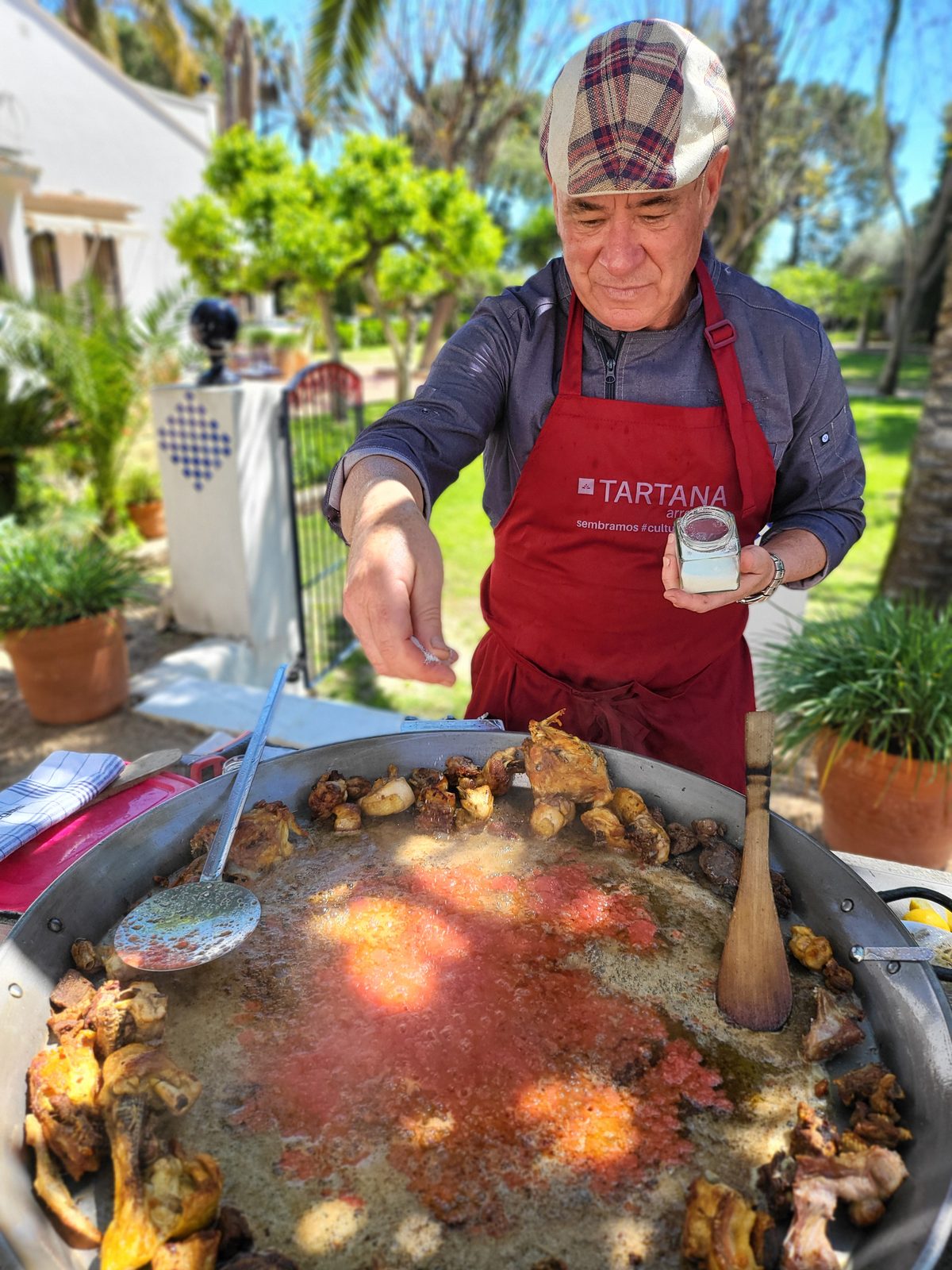
The sofrito
Where the flavour is decided, long before the rice goes in.
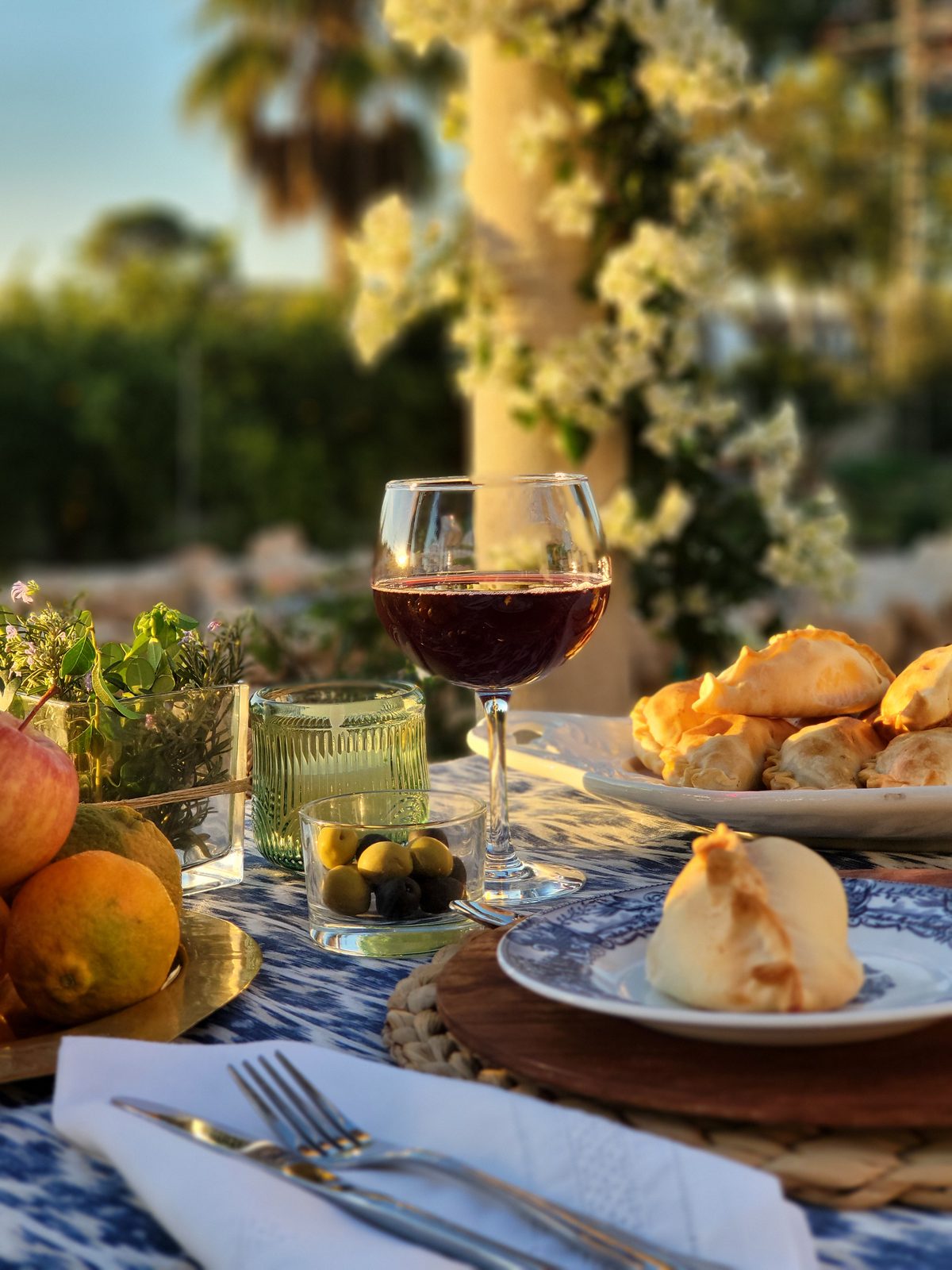
The wine
From Fontanars, an hour from here. High, cold ground by Valencian standards.
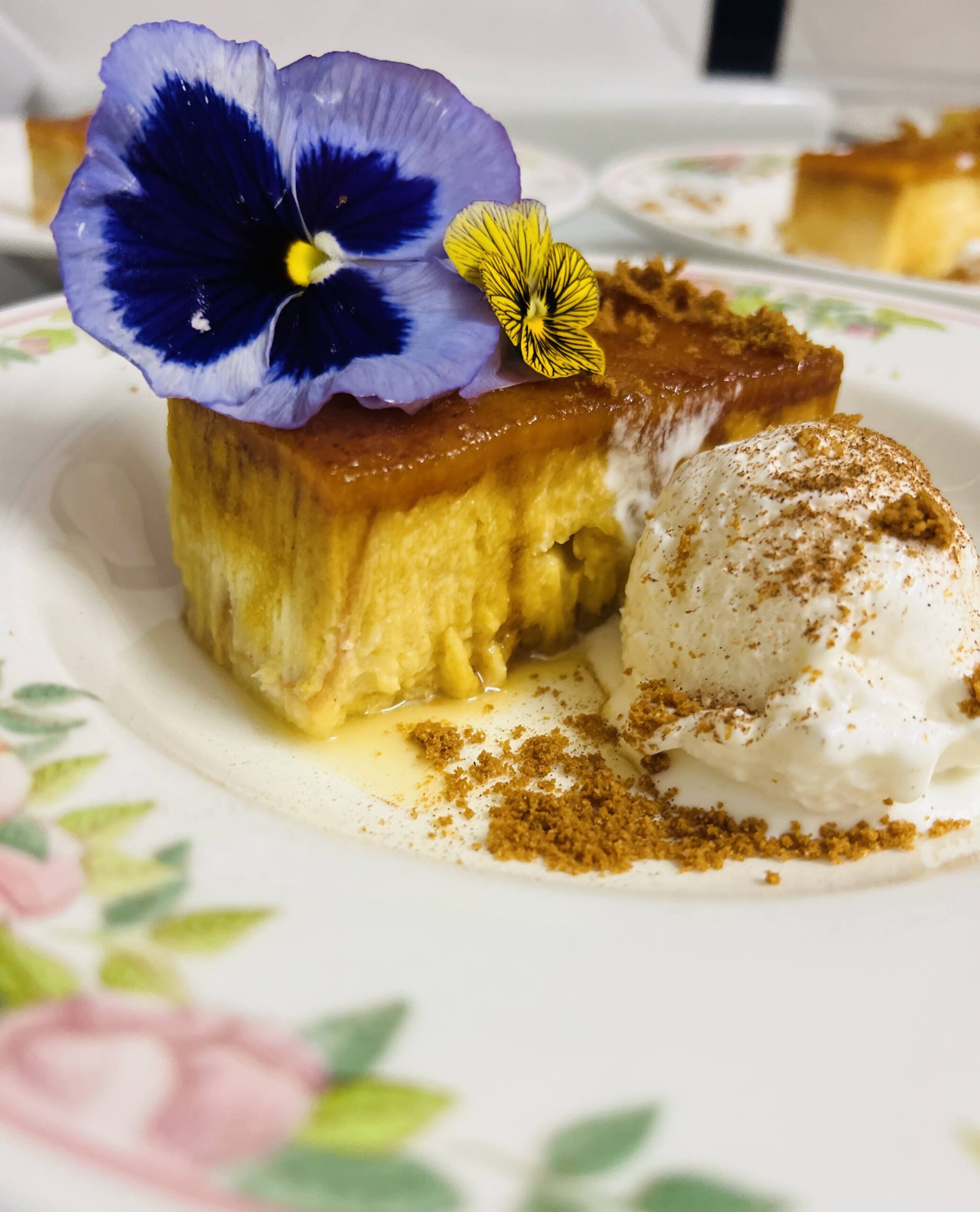
The dessert
Torrijas with cream ice cream
Made here, and so is the ice cream. It’s the dessert that closes a paella best: sweet and cold after a long lunch in the sun.
Like everything else, nothing arrives pre-made.
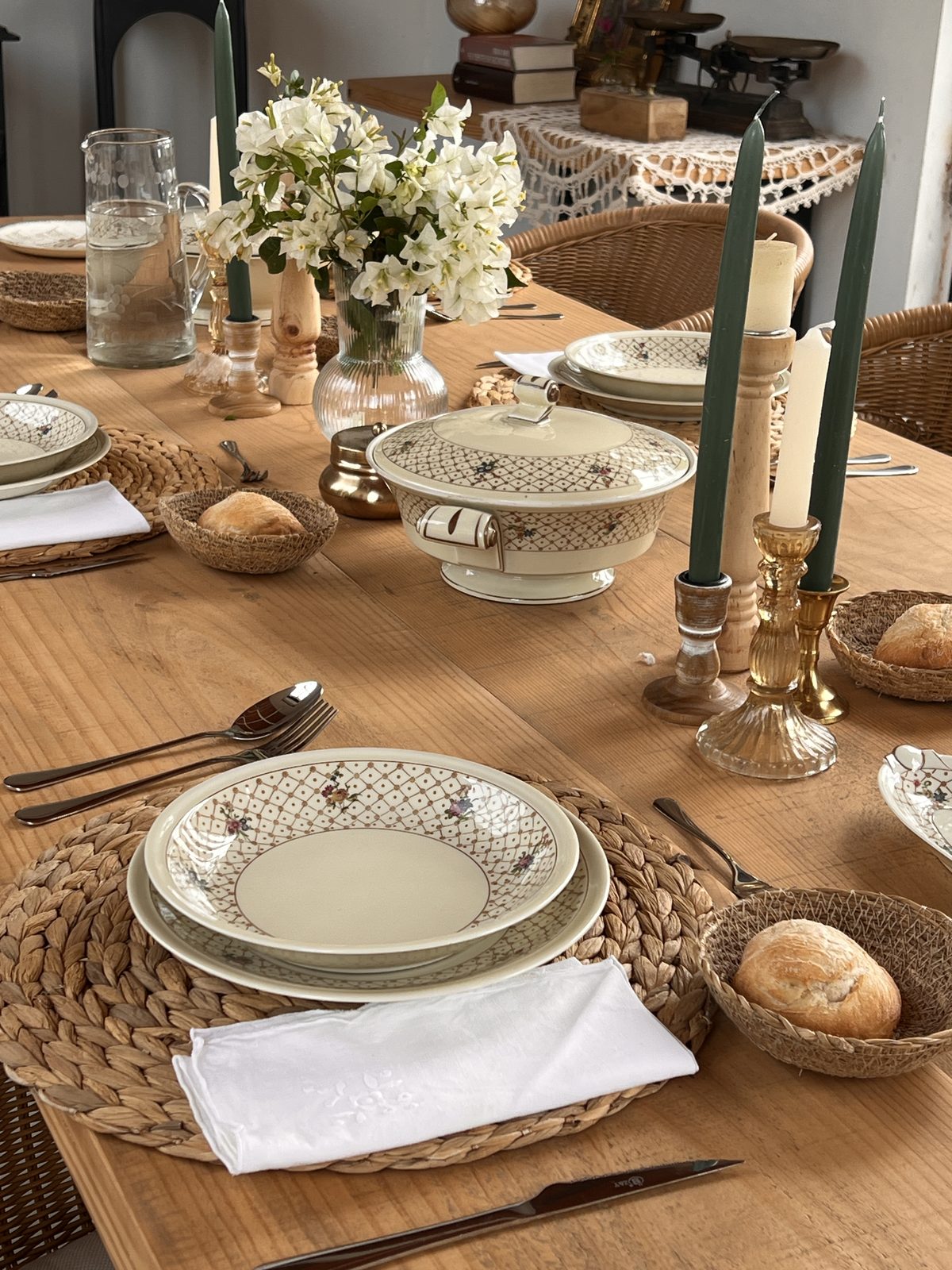
Always, at any meal
The meal doesn’t end on the plate
Linen, good china, crystal, cutlery and flowers cut from the garden that same morning. The table is laid for eating, not for a photograph.
Unlimited water, and up to two beers or two soft drinks per person. The wine is from Fontanars: red, white or rosé depending on what you’re eating and what you fancy.
And the table gets cleared. Nobody in the group lays it, nobody clears it and nobody washes up. That’s what separates eating in a rented house from eating at home.
Before you write
The questions we get most
Can we book the paella without staying?
No. The house is rented whole to one group and the cooking is part of the stay. If you want a standalone two-hour class, there are good and more convenient options in Valencia for that.
Do we have to cook?
It isn’t compulsory: it’s up to whoever’s taking part. José invites you to cook and explains each step, and within the same group everyone chooses. You can cook from start to finish, join in only for the part you fancy, watch from the shade with a drink, or just sit down and eat.
For how many people?
From seven, which is the minimum group for the house. Five is possible too if the group covers the cook’s minimum.
What exactly do we eat?
An aperitivo of Teruel ham, cheeses and olives. A starter of Valencian tomato filled with burrata, with a reduction of garlic, parsley and olive oil. The paella. A homemade dessert. And Fontanars wine.
What’s included?
The food and drink, the cook, and the whole table service: linen, china, glasses, cutlery and flowers from the garden. The clearing up afterwards is included too: nobody in the group has to clear or wash up.
Can we go to the market?
Yes, and it’s worth it. You go to the Mercado Central with the cook to buy the day’s ingredients. Tell us in advance, because it changes the starting time.
What if someone doesn’t eat meat?
It gets sorted. Tell us when you book and we cook accordingly, without making it a problem for the rest of the group.
R.S.V.P.
What to ask for in advance
None of this has a form. You tell us on WhatsApp and it’s sorted before you arrive.
The paella starts a week earlier, at the market. The sooner you tell us, the better it turns out.
Where it happens
A 16th-century villa, entirely yours
The paella is cooked in the garden of a five-hundred-year-old house, five minutes from Valencia airport and fifteen from the centre. Seven bedrooms, five bathrooms, a private pool and 4,500 m² of garden, always for one group at a time.